Spinal Disorders & Injuries in Multan
Assessment and treatment of back and neck problems in Multan, including slipped disc, sciatica, spinal injury, stenosis and deformity, with surgery reserved for the cases that genuinely need it.
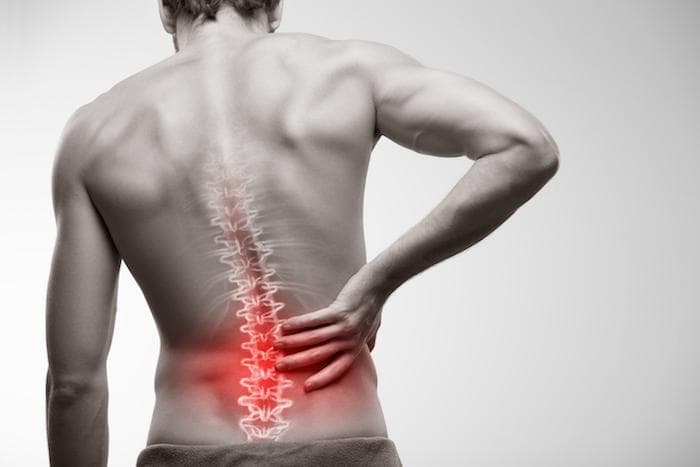
Spinal Disorders & Injuries: what it involves
Most back pain is not caused by anything dangerous and settles with the right activity, strengthening and time. The job of a spine assessment is to separate that group from the smaller number of patients whose pain comes from nerve compression, instability, infection, a fracture or a tumour, because those are the ones where delay causes lasting harm.
The conditions in this group include prolapsed intervertebral disc, sciatica, cervical and lumbar spondylosis, spinal canal stenosis, spondylolisthesis, spinal trauma including fractures of the vertebrae, osteoporotic collapse, infective spondylitis including spinal TB, and deformity. A proper examination covers power, sensation and reflexes in the limbs, and imaging is best requested on the basis of those findings rather than reflexively.
Non-surgical treatment carries most patients: activity modification, a supervised core and postural programme, appropriate medication, and injections in selected cases. Surgical options such as decompression, discectomy, or stabilisation and fusion are advised when there is progressive nerve deficit, an unstable injury, or pain and claudication that has not responded to genuine conservative treatment. Red-flag symptoms such as loss of bladder or bowel control, progressive weakness in a leg, or numbness around the saddle area need to be seen urgently.
This page gives general information about spinal disorders & injuries and is not a diagnosis or a treatment plan. What is right for you depends on your own examination, imaging and medical history. Please discuss your case at a consultation.
Consultation details
- Consultation
- Rs. 2,000
- Timings
- Mon to Sat, 2:00 to 7:00 PMFriday, 3:30 to 8:30 PM
- Clinic
- Fatima Medical Centre, Chowk Rasheedabad, Multan
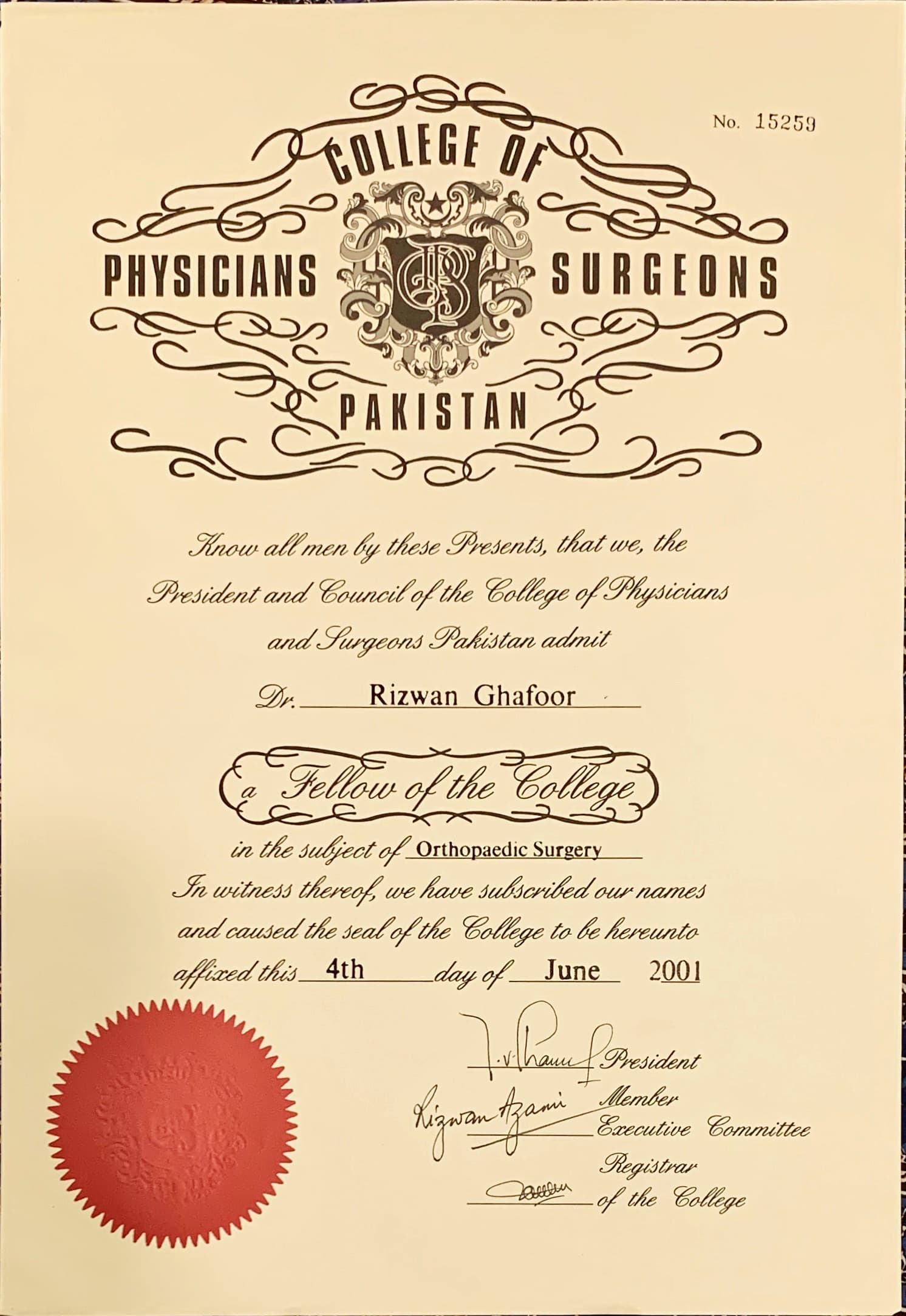
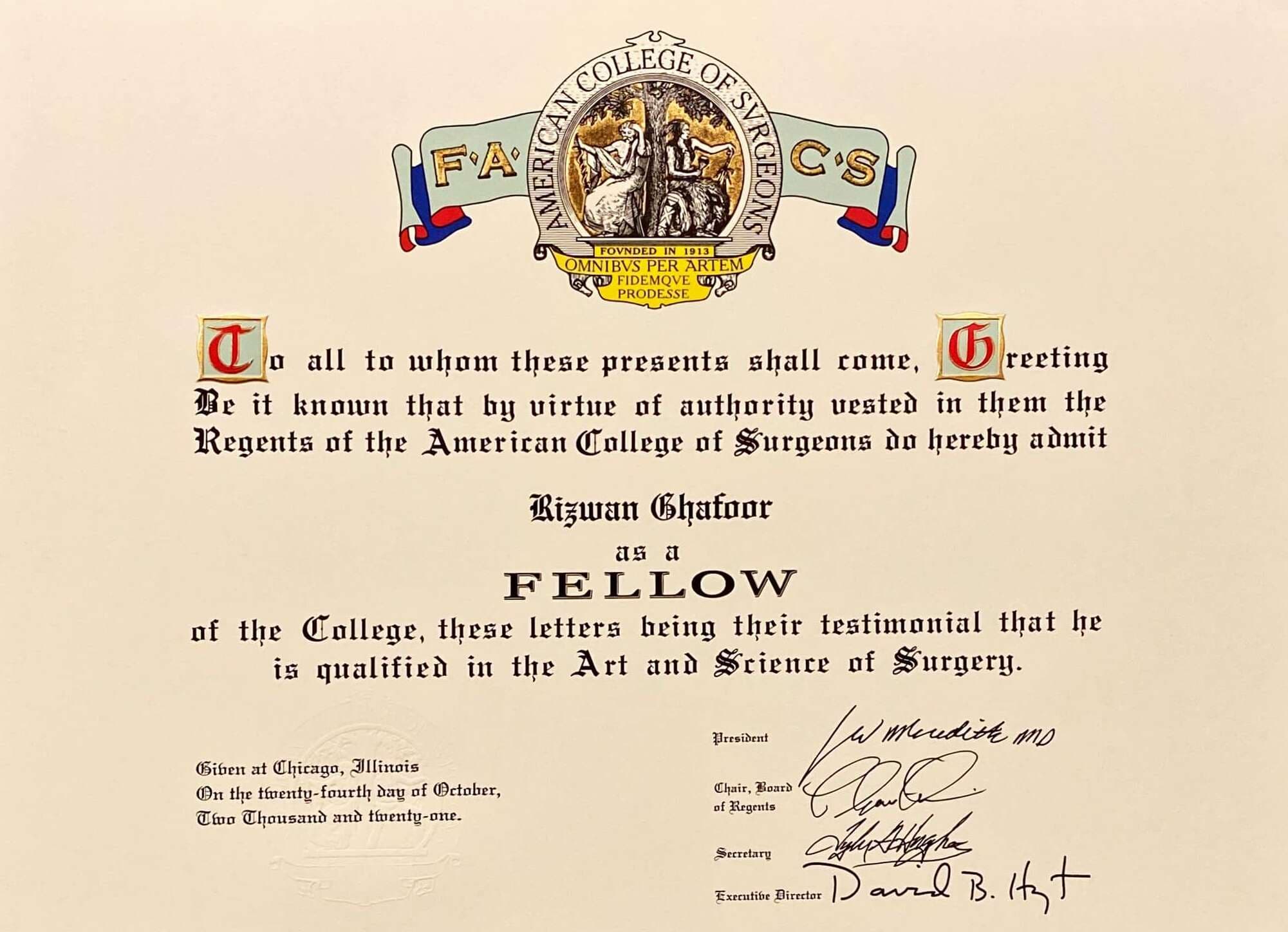
Treated by Dr. Rizwan Ghafoor, BSc, MBBS, MRCPS(Glasg), FCPS (Tr & Orth), FACS(USA).
- Member: AAOS, USA
- Member: Pakistan Orthopaedic Association
- Member: Royal College of Physicians and Surgeons of Glasgow
- Fellow: College of Physicians and Surgeons Pakistan
- Fellow: American College of Surgeons, USA
What this treatment addresses
- Slipped (prolapsed) disc and sciatica
- Lower back pain and neck pain
- Cervical and lumbar spondylosis
- Spinal canal stenosis with walking limitation
- Spondylolisthesis and spinal instability
- Vertebral fractures after injury or osteoporosis
- Spinal infections including tuberculosis of the spine
- Scoliosis, kyphosis and postural deformity
What to expect
- 01Neurological examinationPower, sensation, reflexes and gait are tested to find whether a nerve is actually being compressed, and where.
- 02Targeted imagingX-rays for alignment and instability, MRI where the examination points to nerve compression, infection or a fracture.
- 03Conservative treatmentGraded activity, core and postural strengthening, medication and, in selected cases, injection therapy.
- 04Surgery where indicatedDecompression, discectomy or stabilisation for progressive weakness, instability, or pain that has not settled.
Recovery
The majority of disc-related sciatica improves substantially within six to twelve weeks of correct conservative treatment. After decompression surgery, leg pain often eases immediately and patients are walking the same or next day, with a graded return to sitting, driving and work over the following weeks.
Spinal Disorders & Injuries: common questions
- Does a slipped disc always need surgery?
- No. Around eight to nine out of ten disc prolapses settle without an operation, given the right activity advice, strengthening and time. Surgery is recommended for progressive weakness, loss of bladder or bowel control, or severe sciatica that has not improved after adequate conservative treatment.
- Is spine surgery dangerous or likely to cause paralysis?
- Modern spinal decompression and fusion have a low complication rate when the indication is correct and the surgery is well planned. Paralysis is a rare outcome, not a typical one. Even so, no spine operation is risk-free, so ask specifically what the risks are in your case and what the alternatives to operating would be before agreeing to anything.
- What back pain symptoms need urgent attention?
- Loss of bladder or bowel control, numbness around the groin or saddle area, progressive weakness or foot drop, back pain with fever or unexplained weight loss, and severe pain after a significant fall or accident. Any of these should be assessed the same day.
- Will an MRI be needed at the first visit?
- Not usually. An MRI is requested when the examination suggests nerve compression, infection, a fracture or a tumour, or when conservative treatment has failed and surgery is being considered. Scanning every episode of back pain leads to unnecessary findings and unnecessary worry.
Areas of expertise
- Complex trauma
- Complicated fractures
- Spinal disorders & injuries
- Sports injuries
- Joint disorders & replacements
- Hand surgeries
- Muscular problems
- Pediatric orthopaedics
- Musculoskeletal tumours
Inside the clinic
Frequently asked questions
Everything you need to know before your first visit with Dr. Rizwan Ghafoor.
Book online or call us at 0321 7327777 for booking an appointment. Consultations run Monday to Saturday, 2:00 PM to 7:00 PM, and Friday 3:30 PM to 8:30 PM, at Fatima Medical Centre, Chowk Rasheedabad, Multan.
BSc, MBBS, MRCPS(Glasg), FCPS (Tr & Orth), FACS(USA). He is a Member of the American Academy of Orthopaedic Surgeons (USA), a Member of the Pakistan Orthopaedic Association, a Member of the Royal College of Physicians and Surgeons of Glasgow, a Fellow of the College of Physicians and Surgeons Pakistan, and a Fellow of the American College of Surgeons (USA).
Complex trauma, complicated fractures, spinal disorders and injuries, sports injuries, joint disorders and replacements, hand surgeries, muscular problems, and pediatric orthopaedics.
Rs. 2,000 for consultation.
Fatima Medical Centre, Rasheed Abad, Multan.
Monday to Saturday, 2:00 PM to 7:00 PM. On Friday the clinic runs later, from 3:30 PM to 8:30 PM. The clinic is closed on Sunday.
Patients look for training, results and honest advice. Dr. Rizwan Ghafoor is a Consultant Orthopaedic Surgeon trained in Pakistan, the UK and the USA, holding FCPS (Tr & Orth), MRCPS (Glasgow) and FACS (USA), and is rated 4.9/5 across more than 140 verified patient reviews. He treats bone, joint, muscle and spine conditions at Fatima Medical Centre, Chowk Rasheedabad, Multan.
Yes. The clinic is at Fatima Medical Centre, Chowk Rasheedabad, Multan, which is within reach of most of South Punjab. If you are travelling any distance, call 0321 7327777 first to confirm your slot before you set out.
Yes. Bring your X-rays, MRI films, operation notes and discharge summary to the consultation so they can be reviewed alongside a fresh examination.
Yes. Paediatric orthopaedics is one of the eight areas of expertise, covering children's fractures, limb deformities such as bow legs and knock knees, and congenital conditions.
Visit Dr. Rizwan Ghafoor’s clinic
Book an in-person consultation online, or by phone on 0321 7327777.
- Clinic
- Fatima Medical Centre, Chowk Rasheedabad, Multan
- Timings
- Mon to Sat, 2:00 to 7:00 PMFriday, 3:30 to 8:30 PM
- Consultation fee
- Rs. 2,000